

Commentary
Balázs Jarábik
{
  "authors": [
    "Balázs Jarábik"
  ],
  "type": "commentary",
  "blog": "Carnegie Politika",
  "centerAffiliationAll": "",
  "centers": [
    "Carnegie Endowment for International Peace",
    "Carnegie Russia Eurasia Center"
  ],
  "englishNewsletterAll": "",
  "nonEnglishNewsletterAll": "",
  "primaryCenter": "Carnegie Russia Eurasia Center",
  "programAffiliation": "",
  "topics": [
    "Foreign Policy",
    "Security",
    "Defense"
  ]
}
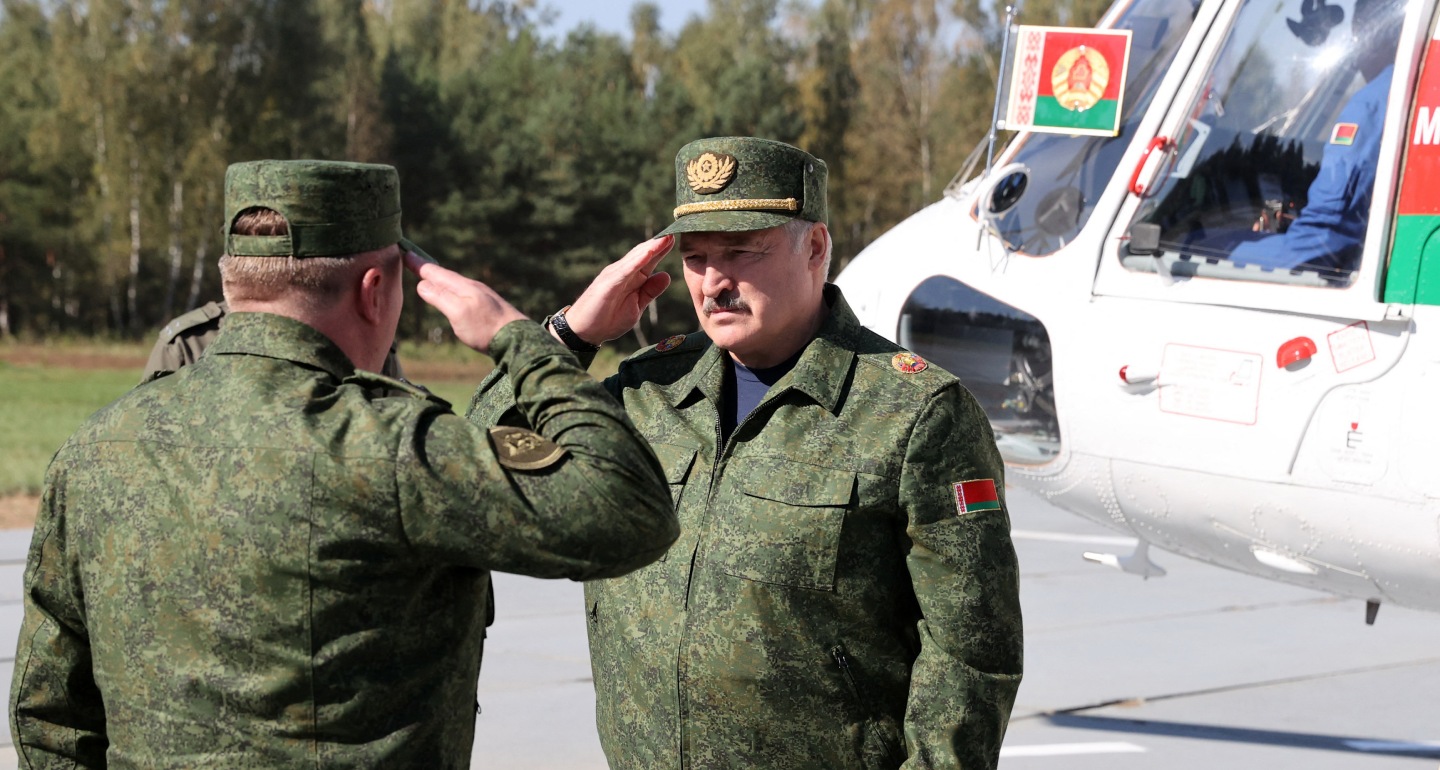
Фото: Getty Images
Ukraine’s increasingly confrontational posture on Belarus reflects Kyiv’s effort to shape the emerging regional order in Eastern Europe. Kyiv wants to limit European normalization with Minsk—and any future rapprochement with Russia.
Several months of Ukraine toughening its stance on Belarus culminated in late May in Ukrainian President Volodymyr Zelensky hosting Belarusian opposition leader Sviatlana Tsikhanouskaya, something Kyiv had avoided for the first few years of the war in order not to overly antagonize Minsk. During their meeting, Zelensky emphasized the need for Belarus to “free itself from Russian interference” and stressed that Ukraine had never posed a threat to Belarus.
The meeting came at a time when the security environment along Ukraine’s northern frontier is deteriorating. Kyiv continues to view Belarus as a critical component of Russia’s military infrastructure, and the “Belarusian balcony” as a potential source of renewed pressure. The deployment of Russian tactical nuclear-capable systems and continued joint exercises have reinforced Belarus’s integration into Russia’s military posture. Ukraine also accuses Belarus of facilitating Russian drone operations through infrastructure near the northern border.
These concerns were reinforced by recent large-scale Russian-Belarusian nuclear exercises involving elements of Russia’s strategic forces and tactical nuclear capabilities deployed to Belarus. Prepared months in advance and following unprecedented Polish-French military exercises earlier this year, the drills reflected the expanding cycle of military signaling along NATO’s eastern flank. The exercise did not provide clear evidence that Russian nuclear warheads are permanently stationed on Belarusian territory (Russia deployed additional nuclear-capable systems specifically for the drills). The issue remains highly classified in Belarus, in contrast to Moscow’s more purposeful nuclear practices.
The exercises primarily served as strategic signaling toward NATO and Ukraine, but underscored Minsk’s deepening integration into Russia’s military framework. The drills also coincided with a growing number of Ukrainian drones crossing into neighboring airspace, including Belarus and several NATO countries. Minsk has accused Kyiv of deliberately launching drones into Belarusian territory, reflecting the growing risks of horizontal escalation beyond the immediate battlefield.
Importantly, the current dynamics are more an evolution of Kyiv’s emerging regional posture than a response to an immediate military threat from Belarus. Ukraine has shifted to a more openly confrontational political posture toward Belarus since late 2025. The change reflects several overlapping dynamics: concerns over emerging U.S. engagement with Minsk, Belarus’s continued military integration with Russia, and Kyiv’s own increasingly assertive regional strategy.
The earlier approach, associated with the previous head of Ukraine’s presidential administration, Andriy Yermak, sought to avoid steps that could push Minsk deeper into Russia’s military orbit. Kyiv occasionally and quietly cooperated with Minsk, including on select security-related matters. However, last December, Zelensky met Tsikhanouskaya for the first time in Vilnius. Since then, Kyiv has adopted two sanctions packages against Belarus and raised the possibility of legal proceedings against Lukashenko.
A key driver behind Kyiv’s shift appears to be concern that U.S. reengagement with Minsk could gradually evolve into a broader normalization track. Washington’s move toward selective engagement reflects a reassessment that isolation and sanctions alone have failed to produce political change since 2020. The process accelerated after Donald Trump’s return to the White House, with the United States seeking to use renewed communication channels to secure prisoner releases, gather intelligence, and limit further Russian consolidation over Belarus. The next potential step is a high-level Trump-Lukashenko meeting linked to the release of the remaining 600-plus political prisoners. However, the process remains fragile, constrained by Minsk’s dependence on Moscow and continued sanctions related to Belarus’s role in Russia’s war against Ukraine.
Ukraine’s evolving policy toward Belarus also reflects Kyiv’s changing self-perception: from a state primarily seeking Western protection to an emerging regional security actor. This shift has a strong societal foundation. According to a new survey, 40 percent of Ukrainians now view their country as a leader among European states, compared with only 8 percent before the full-scale invasion. Nearly three-quarters of Ukrainians believe their armed forces are defending not only Ukraine but Europe as a whole, while the majority say they would support providing military assistance to neighboring European countries in the event of a Russian attack.
This perception reinforces Kyiv’s ambition to shape the regional security order despite enormous structural constraints: continued dependence on Western financial and military assistance, mounting societal fatigue, demographic decline, and uncertainty over the pace and terms of European integration. A more assertive regional posture therefore serves multiple purposes: demonstrating Ukraine’s strategic relevance abroad while sustaining a narrative of resilience and agency at home.
Ukraine’s tougher line toward Belarus is also an effort to influence Europe’s future approach toward Minsk and Moscow. Kyiv’s concern is not necessarily an immediate EU policy reversal, but that selective engagement with Belarus could gradually become a precedent for a broader reassessment of relations with Russia as discussions over a future regional settlement evolve. In this context, Ukraine seeks to position itself as a pillar of Europe’s eastern security architecture in order to ensure that any future order structurally limits Russia’s ability to return as a dominant political and security actor in the region.
So far, Kyiv’s concerns about Minsk being allowed back in from the cold appear to be overstated: European policy toward Belarus remains considerably more cautious than Washington’s approach, even as signs of debate are emerging. Given Lithuania’s consistent opposition to any rapprochement with Lukashenko, a substantive EU policy shift remains unlikely without a broader settlement process around Ukraine. However, a possible adjustment in Poland’s approach, following Minsk’s release of key prisoners and reduction of migration pressure, could accelerate internal EU discussions and test the durability of the current consensus.
Increased French diplomatic activity toward Belarus is also noteworthy, coinciding with European debates about Ukraine’s accession trajectory and future engagement with Russia. On May 24, President Emmanuel Macron held a phone conversation with Lukashenko, initiated by the French side, following several recent official and informal French contacts with Minsk. The discussion focused on regional security, Belarus-EU relations, and bilateral issues ahead of the informal Gymnich meeting of EU foreign ministers, where the question of future EU-Russia dialogue was also discussed.
These developments reflect growing European concerns over how to manage the risks of horizontal escalation along NATO’s eastern flank and whether channels of communication with Moscow will eventually become necessary. Minsk is attempting to position itself within this emerging discussion as a useful intermediary, echoing its diplomatic role after 2014. For Kyiv, however, Belarus represents a broader strategic question: whether the future European order will be built around the long-term containment of Russia or a form of managed coexistence with Russia. Belarus is becoming the first testing ground for that debate.

Political analyst, former Slovak diplomat, and consultant specializing in Eastern Europe
Recent Work
Balázs Jarábik
Balázs Jarábik
Carnegie does not take institutional positions on public policy issues; the views represented herein are those of the author(s) and do not necessarily reflect the views of Carnegie, its staff, or its trustees.

By fueling the arguments of both supporters and opponents of Armenian Prime Minister Nikol Pashinyan, Azerbaijan wants to ensure he is re-elected with a weaker mandate.

Bashir Kitachaev

A much-discussed disagreement over internet restrictions in Russia was never an existential threat for Putin: It was about elite groups protecting their interests.

Alexandra Prokopenko
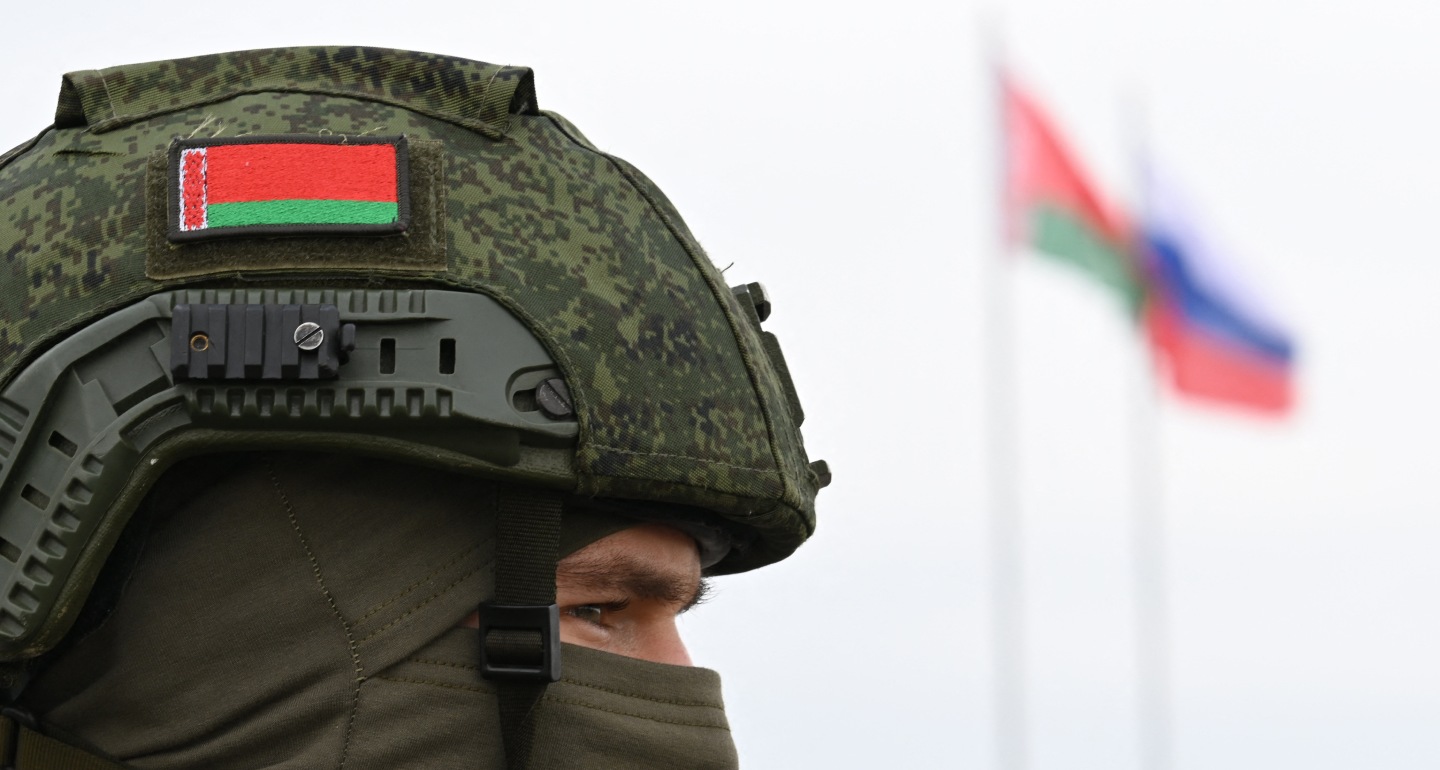
By reminding the world that Lukashenko is a threat to NATO and Ukraine, Kyiv is trying to return the focus to why the Belarusian regime needs to be contained rather than rewarded.

Artyom Shraibman

The demands of the Kremlin’s war in Ukraine, demographic problems, and public hostility toward Central Asians mean Russia does not have enough workers.

Salavat Abylkalikov
Minsk’s faith in the future of its larger neighbor’s economy is fading as Belarusian firms in Russia see record losses.

Olga Loiko